Twitch vs Kick vs YouTube: subscription splits and payout calculator
Compare subscription revenue shares with an interactive calculator, then see why a headline percentage does not tell you a streamer’s income.

The tea in 3
- Twitch’s standard and qualifying Plus rates differ; Prime subscriptions follow a separate country-based model.
- KICK advertises 95% for subscriptions; YouTube pays 70% of net membership revenue.
- The calculator compares rates on an assumed amount, not real salaries or viewer checkout prices.
Twitch, Kick and YouTube use different revenue-share arrangements for subscriptions and memberships. A percentage alone does not tell you a streamer’s income. The amount eligible for the split, audience spending, other income and expenses all matter.
The calculator below lets you apply the published subscription rates to the same hypothetical amount. It is an arithmetic comparison, not a forecast of actual payments or a comparison of the price viewers pay at checkout.
Subscription revenue split calculator
Choose a hypothetical amount that is eligible for a revenue split. Each platform defines that amount differently; a viewer’s checkout total is not a common net-revenue base.
| Platform / product | Creator share | Illustrative amount |
|---|---|---|
| Twitch paid / gifted subscriptions | 50% | $500.00 |
| KICK subscriptions | 95% | $950.00 |
| YouTube memberships | 70% of net revenue | $700.00 |
For $1,000 of eligible revenue: Twitch $500, KICK $950, YouTube $700.
Illustration only. It excludes income tax, expenses, refunds, ads, sponsorships and individual contracts. Twitch Prime subscriptions have separate country-based rates. YouTube ad and Shorts rates are different. KICK describes its 5% as processing. Check your own agreement and dashboard for actual payments.
Sources: Twitch payout programs, KICK revenue split, YouTube earnings overview. Checked November 1, 2026 (US Eastern).
What the percentages leave out
Twitch’s published payout framework describes a standard 50% net subscription share and qualifying Plus Program levels of 60% and 70% on paid and gifted subscriptions. Prime subscriptions use a separate country-based model. Not every streamer qualifies for an improved rate.
KICK describes its subscription split as 95/5, with the 5% covering processing. YouTube’s earnings overview says memberships and other fan-funding features pay 70% of net revenue under its Commerce Product Module. That is different from its advertising arrangements.
A useful comparison starts with a specific product and the platform’s definition of revenue. A gifted sub, a Prime sub, a membership and an ad view are not interchangeable units. Treat an exclusive contract, a sponsorship or a leaked historical payout as a separate data point, rather than multiplying it into someone’s present-day salary.
Use the example carefully
Try $1,000 of eligible revenue, then change the Twitch level. The difference shows the effect of the rate while holding the input constant. It does not assume that the same audience would spend the same amount on each service, that all subscriptions cost the same worldwide, or that fees and taxes are treated identically.
For actual earnings, the creator’s agreement and dashboard are the relevant records. Public subscriber counts alone leave too much unknown. The documented examples below provide context; none establishes every streamer’s income.
Twitch: 50/50, unless you hit Plus
Twitch’s own blog calls 50% “the standard rate.” Its Plus Program pays more: streamers who keep 100 Plus Points for three straight months get 60/40, and 300 Plus Points gets 70/30 on paid and gifted subs.
Points come from subs: Tier 1 is worth 1 point, Tier 2 is 2 and Tier 3 is 6. In January 2024 Twitch removed the old US$100K cap on the 70/30 level, and from May 2024 it let Affiliates qualify too.
New in 2026: on May 13 Twitch opened subs, Bits, emotes, badges and Channel Points to streamers who aren’t Affiliates yet. The catch is that you still need Affiliate or Partner status to get paid out, and the $50 minimum payout still applies.
Kick: the 95/5 pitch
Kick’s streamer page advertises “KICK’s industry-leading 95/5 subscription revenue split.” That split is for subscriptions, not everything a streamer earns.
vs
YouTube: 70% on fan money, less on ads
YouTube’s partner terms say it pays creators 70% of net revenue from channel memberships, Super Chat, Super Stickers and Super Thanks. For Super Chat and Super Stickers, its help page adds that the 70% is calculated after local sales tax and Apple’s App Store fees on iOS.
Ads pay differently: 55% of net ad revenue on long-form videos, and 45% of the Shorts revenue allocated to a creator from YouTube’s creator pool.
The deals that went public
xQc and Kick (2023): His agent, Ryan Morrison, told The New York Times the two-year, non-exclusive deal was worth $70 million, with incentives that could push it to about $100 million, Dexerto reported. Non-exclusive meant he could keep streaming on Twitch.
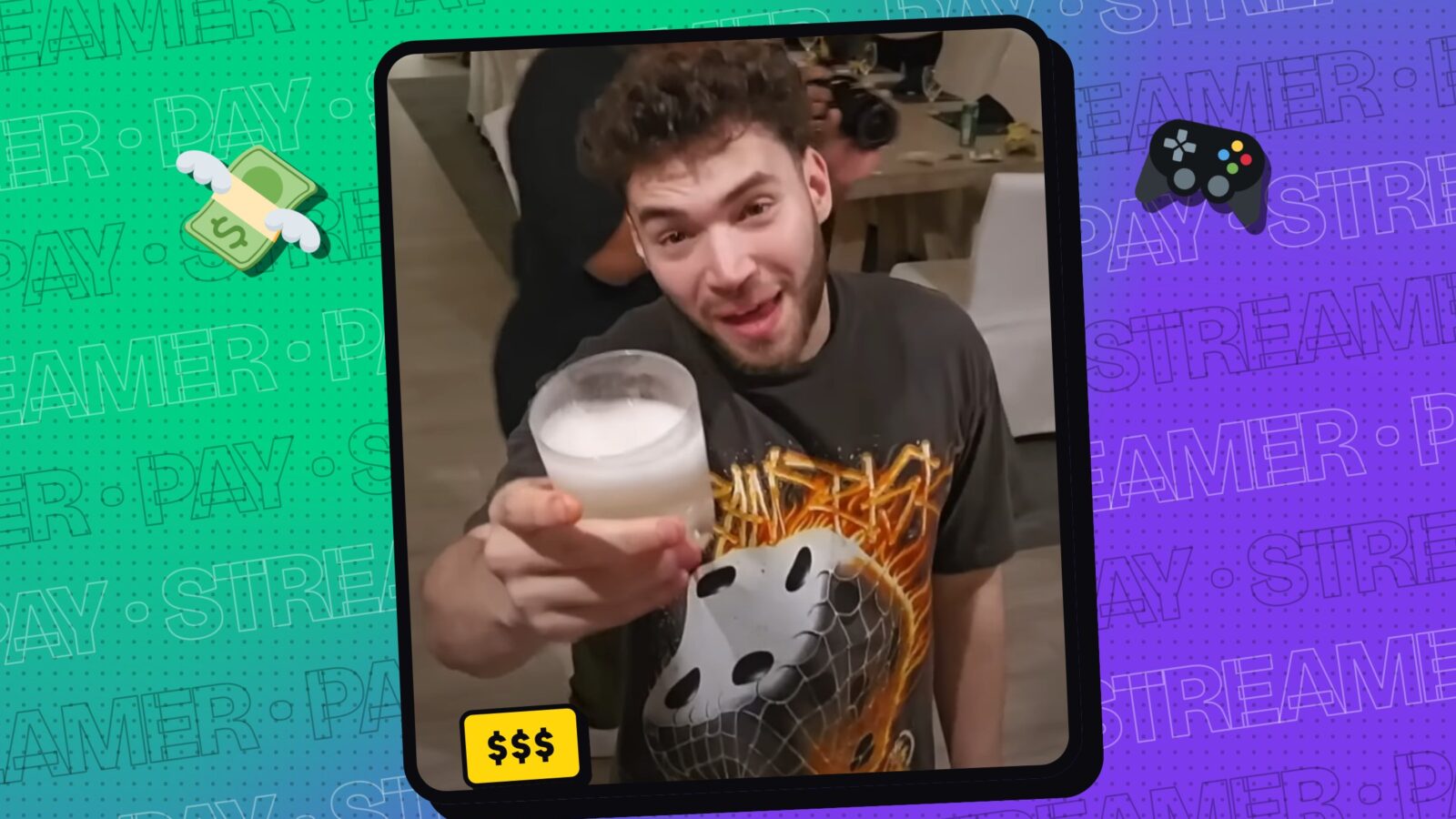
Adin Ross and Kick: Kick has never published his terms. When rumors of a $100 million deal spread, Ross called that figure “exaggerated” in an interview with Jake Paul, The Independent reported in 2024.
What the 2021 Twitch leak showed
In October 2021 hackers dumped Twitch data, and Twitch confirmed the breach. Leaked data showed Critical Role received about $9.6 million in Twitch payouts between August 2019 and October 2021, with xQc at about $8.4 million and summit1g at about $5.8 million, according to Digital Music News.
Those numbers only covered Twitch payouts. They didn’t include sponsorships, merch or donations, and they’re now five years old.
A bigger percentage doesn’t automatically mean a bigger paycheck. Audience size, ad rates, sponsors and side deals usually matter more than the split, and most of those numbers are private.
Where it stands now
As of October 2026, the public splits are 50–70% on Twitch subs, 95% on Kick subs and 70% on YouTube fan funding. Twitch’s big 2026 change made earning tools available to more streamers, not a bigger cut. Anything you see beyond these numbers, like a streamer’s “real” yearly income, is a guess unless they or the platform said it.
Update, November 1, 2026: Added the subscription split calculator and explanations of eligible revenue, Prime subscriptions and product-specific rates. The original publication date is unchanged.
Poll
If you started streaming tomorrow, where would you go?
Your reaction?
Receipts
Where this story comes from. We link primary posts and the outlets that reported them.
- Twitch Blog — An Update to Several Streamer Payout Programs 2024-01-24
- Twitch Blog — Monetization for All 2026-05-13
- Kick — KICK Streamer 2026-10-19
- YouTube Help — YouTube partner earnings overview 2026-10-19
- YouTube Help — Manage Super Chat & Super Stickers for Live Chat 2026-10-19
- Dexerto — xQc inks $70 million Kick deal in non-exclusive two-year partnership 2023-06-17
- Shacknews — xQc signs $100 million non-exclusive streaming deal with Kick 2023-06-16
- The Independent (via AOL) — What is the net worth of Adin Ross? 2024-08-05
- Digital Music News — Massive Twitch leak reveals creator payouts 2021-10-06
- KICK Help Center — Understanding KICK’s revenue split 2026-11-01


Something wrong or missing? Send a correction · How we report
What are we missing?
Which part of a subscription payment would you like explained more clearly?
Keep it about the story. No personal attacks, private information or speculation about minors. Every comment is reviewed before it appears. Discussion rules
No published questions yet. You can start with one.





Leave a question or comment